


ICI vs IUI: what’s the difference?
ICI (intracervical insemination) places semen at the cervix and can be done at home. IUI (intrauterine insemination) places a washed semen sample inside the uterus, which is why it needs a clinic.

What are ICI and IUI?
Intracervical insemination (ICI)
ICI places semen at the cervix and holds it there. A thawed donor sperm sample, or a fresh semen sample is collected and used as it is, with no washing or lab processing (a “neat” sample). It is placed directly onto the cervix, and a cervical cap holds it in contact with the cervical mucus. The cervix then does the work of letting healthy, motile sperm swim on into the uterus.
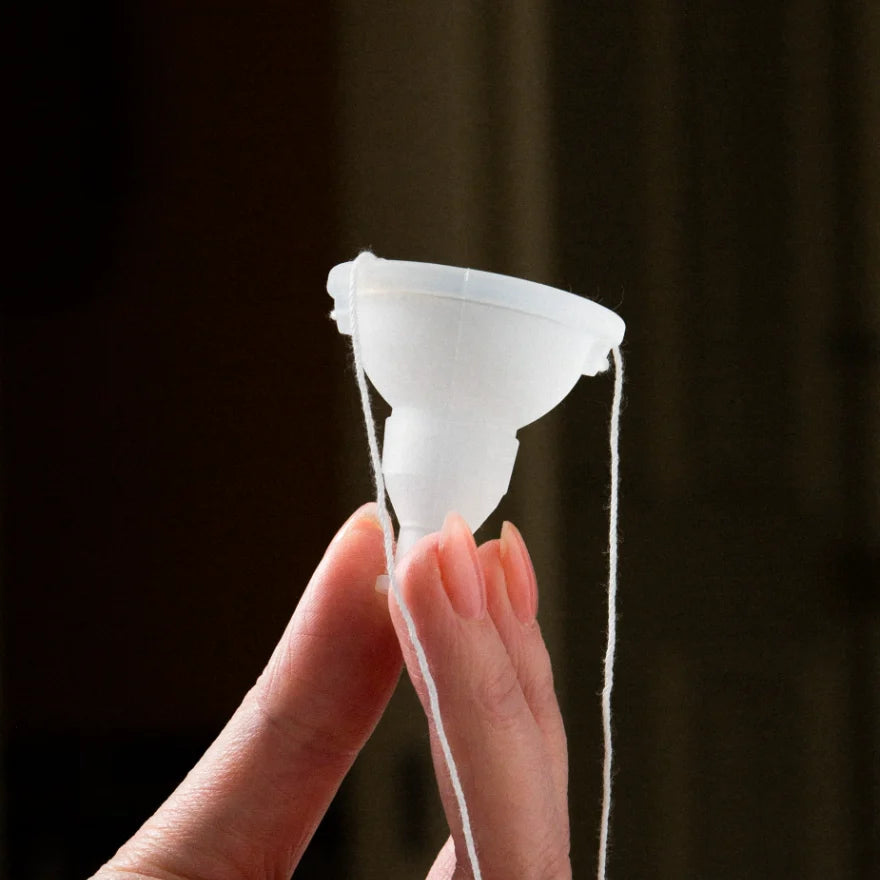
With Béa, the FDA-cleared Béa Applicator carries the sample past the vaginal canal and releases a patented cervical cap over your cervix, where it stays for up to 5 hours. You do it at home, with a fertility nurse a text away.
Intrauterine insemination (IUI)
IUI places sperm directly inside the uterus, and it is always done in a clinic. The semen sample is produced, then washed in a lab to remove the seminal fluid and concentrate the motile sperm. Washing is essential: semen carries bacteria that the cervix would normally filter out, so unwashed semen can’t be placed straight into the uterus because of the risk of infection.
A doctor opens the vaginal canal with a speculum to see the cervix, then passes a thin, flexible plastic tube called a catheter through the cervix and into the uterine cavity. A syringe connected to the catheter injects the washed sample into the uterus. Because the cervix is crossed, IUI needs a trained medical professional, a sterile setting and sterile equipment, so no bacteria are carried into the uterus.
- Collect a semen sample in the sterile cup provided by Béa.
- Pour it into the Béa Applicator and use the Applicator to place the cervical cap over your cervix.
- Leave it in for up to 5 hours, then remove the cap with the string.
- Produce a semen sample at or near the clinic.
- The lab washes and concentrates the sample.
- A doctor places the sample directly into the uterus with a speculum, catheter and syringe.
Both treatments get sperm past the vagina. ICI lets the cervix prepare the sperm. IUI does that work in a lab, then skips the cervix.
At homeICI at home with Béa
In a clinicIUI in a clinic
Intracervical insemination (ICI)
ICI places semen at the cervix and holds it there. A fresh semen sample is collected and used as it is, with no washing or lab processing (a “neat” sample). It is placed directly onto the cervix, and a cervical cap holds it in contact with the cervical mucus.
With Béa, the FDA-cleared Béa Applicator carries the sample past the vaginal canal and releases a patented cervical cap over your cervix, where it stays for up to 5 hours. You do it at home, with a fertility nurse a text away.
- Collect a semen sample in the sterile cup provided by Béa.
- Pour it into the Béa Applicator and place the cervical cap over your cervix.
- Leave it in for up to 5 hours, then remove it with the string.
Intrauterine insemination (IUI)
IUI places sperm directly inside the uterus, and it is always done in a clinic. The semen sample is washed in a lab first: semen carries bacteria that the cervix would normally filter out, so unwashed semen can’t go straight into the uterus.
A doctor opens the vaginal canal with a speculum, passes a thin catheter through the cervix, and injects the washed sample into the uterus with a syringe. It needs a trained clinician, a sterile setting and sterile equipment.
- Produce a semen sample at or near the clinic.
- The lab washes and concentrates the sample.
- A doctor places it in the uterus with a speculum, catheter and syringe.
Both treatments get sperm past the vagina. ICI lets the cervix prepare the sperm. IUI does that work in a lab, then skips the cervix.
Three reasons ICI with Béa works.
The Béa Applicator is built around one idea: get as many healthy sperm as possible into the cervical mucus, and protect them on the way.
-
Sperm is concentrated in the cervical mucus.
Cervical mucus is the body’s own sperm lab (more on that below). The cap concentrates the whole sample right at the cervix, so more sperm reach the mucus. Cervical caps have been shown to deliver 3.23 times more sperm into cervical mucus than intercourse.4
The cap concentrates the whole sample right at the cervix, so more sperm reach the mucus. Cervical caps have been shown to deliver 3.23 times more sperm into cervical mucus than intercourse.4
-
Sperm is held at the cervix by the cervical cap for up to 5 hours.
The cervical cap keeps the semen sample against the cervix for up to 5 hours, giving as many motile sperm as possible the time to move into the cervical mucus and on into the uterus.
-
The Béa Applicator allows sperm to bypass the vaginal canal.
The vagina is acidic and rich in lactobacillus bacteria. Both protect vaginal health and both are hard on sperm: lactobacillus attaches to sperm and slows them down,5 and vaginal secretions can stop sperm moving within 1 to 2 hours.6 The Béa Applicator carries the sample past the vaginal canal, straight to the cervix.
Cervical mucus: the body’s built-in sperm lab.
Before IUI, sperm are washed in a lab. In ICI, cervical mucus does the same jobs, plus a few a lab can’t.7 8 9 It is why ICI doesn’t need a lab, a speculum or a catheter.
What is cervical mucus?
Cervical mucus is a fluid made by the cervix, and it changes through your cycle. For most of the month it is thick and works as a barrier, keeping sperm and bacteria out of the uterus. In the days before ovulation it turns clear, slippery and stretchy, often compared to raw egg white, and its structure opens up to let healthy sperm through.
What cervical mucus does for sperm
-
Filtration
During your fertile window, the gaps in cervical mucus widen to about the size of a sperm head. Normally shaped, strong swimmers push through. Many abnormally shaped sperm don’t.7
During your fertile window, the gaps in cervical mucus widen to about the size of a sperm head. Normally shaped, strong swimmers push through.7
-
Cleaning
-
Preparation
-
Nourishment
Cervical mucus nourishes sperm and holds them in small chambers in the cervix called cervical crypts, then releases them gradually. Sperm can survive in these crypts for up to 5 days.9
Cervical mucus nourishes sperm in small chambers called cervical crypts, then releases them gradually. Sperm can survive there for up to 5 days.9
Cervical mucus is the body’s inbuilt version of a sperm processing lab.
| Cervical mucus | Lab sperm washLab wash | |
|---|---|---|
| Removes seminal fluid | Yes | Yes |
| Concentrates motile sperm | Yes | Yes |
| Filters out abnormally shaped sperm | Yes | Partly |
| Starts preparing sperm to fertilize | Yes | Yes |
| No need for a lab, speculum or catheter | Yes | No |
Why isn’t sperm washed for ICI?
Because cervical mucus performs the same function as a wash performed in a lab. Washing is only needed when sperm skip the cervix, as they do in IUI.
Can donor sperm be used with ICI?
Yes. When you buy donor sperm, not all of it is washed before it’s frozen. That doesn’t stop you using it for ICI: the Béa Applicator is designed to accommodate donor sperm.
Is at-home insemination as effective as IUI?
In our data, Béa’s cumulative pregnancy rate over three cycles was 22.2%, comparable to about 20% for unstimulated IUI in women aged 35 to 37.1 3 The studies differ, so this isn’t a head-to-head trial.
187 patients used Béa over 353 self-administered cycles in a research cohort studied from July to December 2023.1
We compared this Béa cohort with the largest published study of unstimulated IUI (no ovulation medication), the closest dataset to ours: 17,830 IUI cycles in 4,045 women at a fertility clinic in Tokyo.2 In that study, patients had a mean age of 36.6. In Béa’s cohort, the mean age was 36.7.
| Cycle | Patients treated | Pregnancies | Béa cumulative pregnancy rate | Unstimulated IUI estimate |
|---|---|---|---|---|
| 1 | 187 | 12 | 6.4% | |
| 2 | 128 | 9 | 13.0% | |
| 3 | 38 | 4 | 22.2% | 20.3% |
Béa: 1 − (1 − 12/187) × (1 − 9/128) × (1 − 4/38) = 22.2%. Patients who stopped are counted up to their last cycle.
* IUI: see “Our IUI estimate”. Different studies and definitions, so not a head-to-head trial.
* IUI three-cycle estimate. Different studies and definitions, so not a head-to-head trial.
Over three cycles, Béa’s cumulative pregnancy rate is comparable to reported IUI pregnancy rates.
Our IUI 3-cycle rate estimate** How we estimated the IUI 3-cycle rate
The IUI study reports pregnancy rates one cycle at a time, not over three cycles. To compare like with like, we used the same Kaplan-Meier life-table method we use for Béa: we took the study’s per-cycle pregnancy rate for women aged 35 to 37 and carried it through three cycles, as if every patient kept going and the rate stayed the same each cycle. That gives about 20% (20.3%).3
The IUI study reports pregnancy rates one cycle at a time. We used the same Kaplan-Meier life-table method we use for Béa: the study’s per-cycle rate for women aged 35 to 37, carried through three cycles as if every patient kept going and the rate stayed the same. That gives about 20% (20.3%).3 The study found rates were higher in the first three cycles, so the true figure may be a little higher.
Where does Béa’s 39.28% pregnancy rate come from?
Our 39.28% figure looks at the 56 patients who completed up to 3 cycles and reported their outcome. 39.28% of them reported a pregnancy.13 This is called a ‘per protocol’ rate.
When we compare our results with published clinical studies, we run similar statistical analysis for a more accurate comparison. That analysis run here is called Kaplan-Meier.
How we compared Béa’s data with the IUI studyHow we compare Béa’s data with IUI data
Like with like
Closest age match
Different definitions
Different patients
Male factor
Early evidence of results in a male factor fertility population.11
The pattern fits how and why Béa works when sperm swim less well.
Who was in the male factor group
- 63 patients with a reported sperm abnormality
- Female age: mean 36.8, median 35, range 31 to 47
- 38% trying 2+ years · 14% previous IVF
- 36 with no female fertility condition, 27 with one female fertility condition reported
- 63 patients with a reported sperm abnormality
- Female age: mean 36.8, median 35, range 31 to 47
- 38% trying 2+ years · 14% previous IVF
- 36 with no female fertility condition, 27 with one
25% 3-cycle pregnancy rate
where any sperm abnormality was reported
3-cycle cumulative pregnancy rate (Kaplan-Meier)
Cohort size: 63 patients
Kaplan-Meier · 63 patients
29% 3-cycle pregnancy rate
with low sperm motility and a female fertility condition reported also
3-cycle cumulative pregnancy rate (Kaplan-Meier)
Cohort size: 39 patients
Kaplan-Meier · 39 patients
32.1% 3-cycle pregnancy rate
where low sperm motility was the only issue, with no female fertility condition reportedwhere low sperm motility was the only issue, with no female fertility condition
3-cycle cumulative pregnancy rate (Kaplan-Meier)
Cohort size: 21 patients
Kaplan-Meier · 21 patients
Clinic-grade treatment, without the clinic.
Béa offers clinic-grade treatment without the clinic. A fertility clinic offering IUI gives you insemination, ovulation medication if you need it, and clinician and nurse care. Béa gives you all three, at home, for far less than the cost of IUI.A fertility clinic offering IUI gives you insemination, ovulation medication if you need it, and care. Béa gives you all three, at home, for far less.
-
Insemination
In a clinic
A catheter, placed in the uterus by a doctor at the clinic using a speculum.
In a clinic: IUI, placed in the uterus by a doctor at the clinic.
YesWith Béa
ICI with the FDA-cleared Béa Applicator, at home.
-
Medication
In a clinic
Blood tests and pelvic exams, with 4+ monitoring appointments per cycle.
In a clinic: Ovulation medication, if your doctor prescribes it.
YesWith Béa
Ovulation medication, if a licensed OBGYN prescribes it, shipped to you.Ovulation medication, if a licensed OBGYN prescribes it, shipped to your door.
-
Care
In a clinic
Appointments and monitoring at the clinic, with all the travel and billing admin.
In a clinic: Appointments and monitoring at the clinic.
YesWith Béa
Fertility nurses you can text, and licensed OBGYNs for prescriptions.
Get started with Béa from $150 a cycle.
Check eligibilityICI with Béa vs IUI, at a glance.
| ICI with BéaAt home | IUIIn a clinic | |
|---|---|---|
| Treatment | ||
| Where it happens | At home | In a clinic |
| Semen sample | Neat sample, no lab processing Or donor sperm sample from a bankNeat sample, no lab processing, or donor sperm from a bank |
Washed in a lab first |
| Where the sample goes | Onto the cervix, held by a cervical cap for up to 5 hoursOnto the cervix, held by a cap for up to 5 hours | Into the uterus, through a catheter |
| Who does it | You, with the FDA-cleared Béa Applicator | A doctor, with a speculum, catheter and syringe |
| Cost and support | ||
| Cost per cycle | $150 to $475 | $750 to $4,00012 |
| Ovulation medication, if clinically indicated | Yes | Yes |
| Fertility nurse and doctor support | Yes | Yes |
| HSA/FSA eligible | Yes | YesUsually, check your planYesUsually |
| Results | ||
| Cumulative over three cycles (Kaplan-Meier)Pregnancy rate over three cycles | 22.2%1 | About 20%3 |
Results: Béa UK research edition, 187 patients, 353 cycles; unstimulated IUI (no ovulation medication), ages 35 to 37, Honda et al. 2015. Different studies and definitions, so not a head-to-head trial: see “How we compared” above. IUI cost: typical US self-pay range per cycle, including monitoring and medication.12
Is ICI the same as using a syringe? No.
-
A syringe leaves semen in the vaginal canal.
Unwashed semen sits in an acidic environment, full of lactobacillus bacteria that slow sperm down and stop them moving.Unwashed semen sits in an acidic environment, full of lactobacillus that slows sperm down.
-
Nothing holds it at the cervix.
Without a cap, semen pools in the vaginal canal or runs back out, instead of staying where sperm need to be.Without a cap, semen pools in the vaginal canal or runs back out.
-
Many syringes don’t reach the cervix.
Depending on its length, a syringe deposits semen near the cervix rather than on it.
A syringe works the same way as sex: semen in the vagina, near the cervix. If sex hasn’t led to a pregnancy, a syringe doesn’t change the mechanics. ICI and IUI do: they place sperm at, or past, the cervix.A syringe works the same way as sex. If sex hasn’t led to a pregnancy, a syringe doesn’t change the mechanics. ICI and IUI do.
Why patients prefer ICI at home.
-
Less pressure
“Béa felt like such a relief to have a solution that allowed us to focus on conception without the stress of timed-intercourse.”
PMOS (PCOS) · TTC 18 months
-
At your own pace
“I really wanted to avoid stress on this journey. Béa allowed me agency. I could go at my own pace at home.”
Low sperm motility · TTC 6 to 9 months
-
Comfortable
“I’m very sensitive, I can’t stand smear tests. But this was easy for me, it was not painful.”
Participant C21 · Usability testing
-
No travel
“IUI requires me to take multiple days off work and drive 190 miles to the office to complete the treatments.”
Béa patient · US research, September 2026
-
Cost
“It solved a financial barrier caused by things like IUIs. Our clinic charges $3,000 to $5,000 per IUI cycle.”
Béa patient · US research, September 2026
-
Together
“Nobody talks about the effects of infertility on men. There’s a peacefulness to using Béa, he could do everything in his own time.”
Amelia’s story · TTC about 3 years
Questions, answered.

Still deciding?
Our fertility nurses can talk you through ICI, IUI and what fits your history.Text a fertility nurse about ICI or IUI.
Text usWhat is ICI (intracervical insemination)?
ICI places a semen sample at the cervix, where cervical mucus helps healthy sperm swim into the uterus. It doesn’t need washed sperm or a clinic, so it can be done at home. The Béa Applicator holds the sample at the cervix with a cervical cap for up to 5 hours.
What is IUI (intrauterine insemination)?
IUI places a washed sperm sample directly inside the uterus through a thin catheter. It is always done in a clinic by a trained clinician.
Is ICI the same as the turkey baster method?
No. A syringe or “turkey baster” leaves semen in the vagina, much like sex does. ICI with Béa holds the sample against the cervix with a cervical cap for up to 5 hours.
Which is better, ICI or IUI?
Neither is better for everyone. Over three cycles, Béa’s cumulative pregnancy rate (22.2%) is comparable to our estimate for unstimulated IUI (about 20% at ages 35 to 37).1 3 A 2018 study also found similar live birth rates for ICI and IUI.10 ICI is less invasive, done at home and costs far less. IUI may be the better fit if your doctor recommends it.
What’s the difference between Béa’s 39% per-protocol pregnancy rate and the 22% Kaplan-Meier pregnancy rate?
Both figures come from the same research cohort, counted in two different ways.
The 39% per-protocol rate looks only at the 56 patients who completed the protocol: they became pregnant, or completed up to three cycles and reported their outcome. Of those 56, 39.28% reported a pregnancy.13 Patients who stopped before the end of the protocol without reporting an outcome aren’t counted.
Kaplan-Meier is a statistical method for groups of patients where some people naturally stop along the way, and it is the method used in clinical studies. The 22.2% Kaplan-Meier rate starts with all 187 patients who began treatment and follows them cycle by cycle: 12 of 187 reported a pregnancy in cycle 1, 9 of the 128 who went on to cycle 2, and 4 of the 38 who went on to cycle 3. Every cycle a patient actually took is counted, including cycles that didn’t lead to a pregnancy by patients who later stopped. Patients who stopped are counted up to their last cycle.1
That makes the Kaplan-Meier figure the more conservative of the two, and it is the standard way clinical studies report pregnancy rates over several cycles. So we use 22.2% whenever we compare Béa with published studies, such as the IUI study on this page, and 39% when we describe our own results on their own.
Neither figure is a live-birth rate: both are based on self-reported pregnancies. Results vary and are not guaranteed.
Why would I choose IUI over ICI?
Your doctor may recommend IUI if, for example, sperm count is very low, the cervix is a barrier (such as after some cervical surgery), or you’re using donor sperm prepared for IUI. In a clinic, your cycle can also be monitored in person.
Why would I choose ICI over IUI?
Why try ICI or IUI before IVF?
IVF is more invasive, more expensive and takes longer. If your tubes are open, you ovulate (with or without medication) and there’s no severe male factor, insemination is a gentler first step that gives sperm a head start.
Can I go straight to IVF?
It’s up to you. With blocked tubes or severe male factor, for example, your doctor will very likely recommend going to IVF first. Otherwise, many insurance plans won’t cover IVF until you’ve tried a set number of IUI cycles, often three.
How many cycles are recommended?
We recommend planning for three cycles. In IUI studies, most pregnancies happen in the first three cycles.2 If you’re not pregnant after three, our care team will talk you through next steps.
Can I do IUI at home?
No. IUI passes a catheter through the cervix into the uterus, so it needs a trained clinician, a sterile setting and sterile equipment.
Can I do ICI at home?
Yes. ICI doesn’t pass through the cervix, so it can be done at home. The Béa Applicator is an FDA-cleared Class II medical device for at-home intracervical insemination.
Why isn’t sperm washed for ICI?
Does one Béa kit contain two Béa Applicators?
Yes. Each cycle includes two Béa Applicators for a technique called double insemination: inseminating twice, about 24 hours apart, to cover more of your fertile window.
Can I use my HSA or FSA for ICI with Béa?Can I use my HSA or FSA?
Yes. Béa is HSA/FSA eligible. IUI is usually an eligible medical expense too. Check the details with your plan.
Is ICI right for everyone?
No. ICI with the Béa Applicator isn’t suitable if you’re pregnant, have had a hysterectomy, have both fallopian tubes blocked, tied or removed, have a vaginal or uterine prolapse, a known silicone allergy, a known STI, or active vaginal irritation or lesions. You’ll also need to wait three months after vaginal or cervical surgery, or a colposcopy with a biopsy or treatment. Our 2-minute eligibility assessment checks for all of these, and our care team is a text away if you want to talk it through.
Can I get ovulation medication with Béa?
A licensed OBGYN reviews your assessment, usually within 24 hours, and can prescribe ovulation medication if it’s clinically appropriate. It ships to your door, and a fertility nurse guides you through when to take it.
Is the Béa Applicator FDA-cleared?
Yes. The Béa Applicator is an FDA-cleared Class II medical device.
Fertility care at home, ready when you are.
Notes and sourcesNotes and sources (13)
Béa UK research edition, July to December 2023: 187 patients, 353 self-administered insemination treatment cycles, 25 pregnancies. Kaplan-Meier life table: cycle 1, 12 pregnancies in 187 patients; cycle 2, 9 in 128; cycle 3, 4 in 38. Patients who stopped were censored at their last completed cycle. Per-cycle rate 7.1% (25 of 353). Internal observational data; no control group; pregnancies self-reported, not live births. Results vary and are not guaranteed.
Honda T, Tsutsumi M, Komoda F, Tatsumi K. Acceptable pregnancy rate of unstimulated intrauterine insemination: a retrospective analysis of 17,830 cycles. Reprod Med Biol. 2015;14:27-32. doi:10.1007/s12522-014-0192-2. Women aged 35 to 37: 4,794 cycles. Pregnancy defined as clinical pregnancy confirmed on ultrasound.
Béa calculation from note 2: the study’s per-cycle rate for women aged 35 to 37, compounded over three cycles (life-table method, assuming the same rate each cycle) = 20.3%.
Cervical caps and sperm in cervical mucus: PubMed 26680394.
Lactobacillus and sperm motility: PMC6909777.
Vaginal secretions and sperm immobilization: PubMed 397707.
Cervical mucus as a filter: PubMed 1755453; PubMed 2397794.
Cervical mucus and capacitation: PubMed 2758095; PMC3720105.
Sperm survival in the cervix: UCSF Center for Reproductive Health.
ICI and IUI live birth rates: PMC6491301.
Male factor groups: semen analysis results self-reported; groups overlap; Fisher exact tests not significant (p=0.64, p=0.58).
IUI cost: FertilityIQ, “The cost of IUI”. Insemination $150 to $400, monitoring and bloodwork $500 to $1,000, medication about $100 (oral) or about $2,000 (injectable) per cycle. fertilityiq.com/iui-or-artificial-insemination/the-cost-of-iui
39.28% pregnancy rate among 56 Béa users who completed up to three Béa insemination treatment cycles and reported outcomes between June–Dec 2023. Average age 37. Internal observational data; no control group. Results vary and are not guaranteed. “Pregnancy rate” refers to reported pregnancies during/after treatment; it is not a live-birth rate.