Jul 2, 2026
Béa Fertility is AMAZING!
Béa Fertility has been nothing but wonderful! … I am now 7 weeks pregnant and couldn’t have done this without Béa!
Mariah B. · US

A licensed OBGYN reviews your health and TTC history online.Rx ships discreetly from a licensed US pharmacy.A fertility nurse guides you through every cycle.
And you shouldn’t need a string of clinic visits, or the bill that comes with them, to access ovulation medication.
A licensed OBGYN reviews your health history within 24 hours to make sure it’s right for you.
Check eligibility →

A pill taken for five days early in your cycle, to help your body release an egg on time.
Learn about Letrozole →

They say it takes a village. We built one you can text, with replies Monday to Friday.
Meet your nurse →

This is not a consult. It is a free initial check to see if medication could be right for you. Not prescribed? We refund everything except a $25 processing fee.
Take 2 minutes to fill out our eligibility assessment and get a recommendation of which treatment is right for you. Insemination, medication, or both?
This is not a consult. It is a free initial check to see if medication could be right for you.
Guided care, minus the clinic visits
Licensed OBGYNs prescribe if it’s right for you. A fertility nurse guides you. No waiting rooms, no time off work.
Feel heard, not rushed
Text a fertility nurse anytime, and book a video call when you need more support. Replies Monday to Friday.
Safety comes first
FDA-cleared Class II medical device. Licensed US OBGYNs prescribing, US pharmacies dispensing every script.
HSA/FSA eligible, pay in 4
Use your HSA or FSA card through Flex, or split into 4 interest-free payments.
Refund if not prescribed
Not prescribed? We refund the medication and physician review, minus a $25 processing fee.¹
Ships to all 50 states
Shipped in discreet packaging and tracked all the way to your door.
Read public reviews from verified Béa users.
Trustpilot
Excellent · TrustScore 4.3
Béa Fertility has been nothing but wonderful! … I am now 7 weeks pregnant and couldn’t have done this without Béa!
Mariah B. · US
Got pregnant after my first use!
Madeline B. · US✓ Verified
Being in a same sex marriage and using fertility treatment centers makes this process hard. Bea came into our life’s when we didn’t know if we would continue the journey of expanding our family.
Katrice B. · US
Swipe for more reviews →
Read our reviews on TrustpilotReviews are from people who used Béa insemination treatment.
If you order ovulation medication and an OBGYN decides it isn’t right for you, we’ll refund you.
We refund the cost of the medication and physician review, minus a $25 processing fee.
A licensed OBGYN reviews your health before prescribing, and a fertility nurse supports you from your first dose to your pregnancy test. Safe, guided care with peace of mind.
Before you pay, a free 2-minute online eligibility assessment checks for anything that could rule out medication and flags whether it may be a good fit for you.
You'll complete a medical questionnaire, and a licensed OBGYN reviews your full history before writing any prescription. If medication isn't right for you, we'll let you know.¹
Get a call with a fertility nurse to go over your medication instructions, common side effects and what to expect.
Text or email your fertility nurse through every cycle, Monday to Friday. Timing, a new twinge, a test you can’t read. Real answers from a real nurse.
One price covers your OBGYN review, medication (if prescribed), pre-treatment appointment and text/email support all cycle.
¹ If a licensed OBGYN decides a medication isn’t right for you, we refund the cost of the medication and physician review, minus a $25 processing fee.
They say it takes a village. We built one you can text. Our team of fertility nurses includes Maggie, our Lead Fertility Nurse, who has spent over 14 years in fertility and reproductive care and has worked at some of the best clinics in the US.

Finished my last letrozole pill today. When do I start ovulation tests?
Start in two days, once a day around the same time. Send me a photo if the line’s hard to read and I’ll tell you what I see.
Maggie, RN · Lead Fertility Nurse

Maggie, RN
Fertility nurse · Included in every Béa plan
Text/email support
Monday to Friday
“How will I know if letrozole is working?”
The common signs your body may be responding, like a positive ovulation test, and when to talk to your physician.
“Hot flashes on day 3 of letrozole. Is that normal?”
The common side effects to know about, and how to reach your physician if anything worries you.
“I took my last pill today. When do I start testing?”
Timing ovulation tests and your fertile window on medication.
“This cycle was negative. Should I try another round?”
Someone to talk it through with, tips to fine-tune your timing, and a clear picture of your options.
Finished my last letrozole pill today. When do I start ovulation tests?
Start in two days, once a day around the same time. Send me a photo if the line’s hard to read and I’ll tell you what I see.
Maggie, RN · Lead Fertility Nurse
Prescribed by a licensed OBGYN. Guided by your fertility nurse. Refunded, minus a $25 processing fee, if it’s not right for you.

A quick check for anything that rules out medication, so you can buy with confidence, knowing Béa is safe for you.
Choose 1 or 3 cycles of ovulation medication.
After you’ve checked out, we’ll email you a detailed online medical questionnaire.
Your form will be reviewed by a licensed OBGYN, who will prescribe medication only if it’s appropriate for you. They may ask some follow-up questions if needed. If the OBGYN decides medication is not right for you, we refund the cost of the medication and physician review, minus a $25 processing fee.
Pick a time that suits you for an online appointment with a fertility nurse. Every plan includes one, so you know what to expect and can ask any questions before you start.
Filled by a licensed US pharmacy and delivered in discreet packaging to your door.
You’ll take your ovulation medication early in your cycle, usually for five days. Text or email your fertility nurse for support, Monday to Friday.
Ovulation medication can help your body release an egg, on time. Letrozole and Clomid are the most common ovulation medications. Both are pills you take at home for five days, if a licensed OBGYN prescribes them.
Your body releases an egg. The few days just before and on ovulation make up your fertile window, the best time to have intercourse. If intercourse isn’t right for you, you can use our insemination treatment instead.
When to take medication and inseminate
An example 28-day cycle, where day 1 is the first day of your period. The lines show typical hormone levels. The shaded areas show when ovulation medication is usually taken and when your fertile window falls. Your exact timing may differ.


Ovulation medication helps you ovulate on time. Our FDA-cleared insemination treatment helps you make the most of your ovulation window each cycle. All from home, with the same fertility nurse support.
The ovulation medication licensed OBGYNs most commonly prescribe is letrozole.


A pill taken for five days early in your cycle. It helps your body release an egg, and release it on time.
Letrozole briefly lowers estrogen levels, so your body makes more of the hormone that grows and releases an egg.
People whose ovulation is irregular or absent, including PMOS. Physicians may also prescribe letrozole for unexplained infertility, or to make ovulation more predictable.
Letrozole isn’t suitable if you’re pregnant, breastfeeding, or allergic to it. If you have a history of liver disease, cardiovascular disease, abnormal uterine bleeding, or ovarian cysts, include this in your medical questionnaire. An OBGYN will review it closely to decide if it’s safe for you.
In a trial of 750 women with PMOS (formerly PCOS), letrozole led to more live births than clomiphene: 27.5% versus 19.1%.² Almost 8 in 10 people who aren't ovulating on their own will ovulate on oral medication within several cycles.³
Letrozole is a pill you swallow with water. You take it for five days, usually from days 3 to 7 of your menstrual cycle, at the same time each day (day 1 of your menstrual cycle is the first day of your period).
Most are mild and pass within a few days: hot flashes, headache, tiredness, dizziness and joint aches. Less often: nausea, breast tenderness or mood changes. While rare, serious side effects include blurred vision, severe pelvic pain or bloating, heavy bleeding, or signs of an allergic reaction. If you notice any of these, contact your prescribing physician before taking your next dose. Call 911 if your symptoms are severe or you think it’s an emergency.
Simple fertility care that doesn’t cost you your savings, your health, or your sanity.
“We were in utter disbelief as we got pregnant on our first try. It was the most incredible feeling after seeing so many negative tests.”

“To anybody struggling with infertility, give Béa a go. It is affordable, and I’m so glad we tried it.”
“I’m 19 weeks pregnant, due at the end of December. We’re having a Christmas baby! After everything we’ve been through, I still can’t quite believe it’s real.”

“It’s a natural thing to give a shot before forking out thousands on a treatment like IVF.”
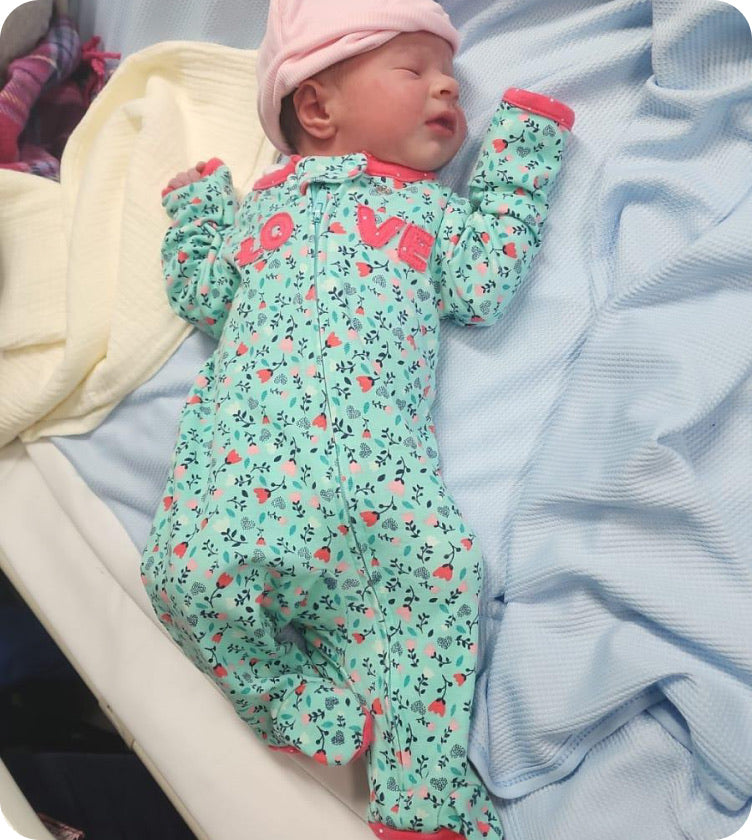
“Nobody talks about the effects of infertility on men. There’s a peacefulness to using Béa. He could do everything in his own time.”

“We were in utter disbelief as we got pregnant on our first try. It was the most incredible feeling after seeing so many negative tests.”
“It’s a natural thing to give a shot before forking out thousands on a treatment like IVF.”
“I’m 19 weeks pregnant, due at the end of December. We’re having a Christmas baby! After everything we’ve been through, I still can’t quite believe it’s real.”
Names changed for privacy. Quotes from published Béa success stories.
Reviews are from people who used Béa insemination treatment.
Most people try at home for months before a clinic will see them. Béa gives you something more to try in between, without the referral, cost or invasiveness of IUI or IVF.
Swipe to compare all four →
FROM MONTH 1 · AT HOME
The usual first step
About 1 to 4% per cycle (unexplained)⁴
Timed intercourse and ovulation tests
None.
$0, plus tests
None
None, unless you ask
MONTHS 3 TO 12 · AT HOME
The step most people miss
39% reported a pregnancy over three cycles, average age 37⁵
Insemination at home with the Béa Applicator. Letrozole only if prescribed.
Non-invasive. An applicator places a cervical cap, worn for up to 5 hours.
From $150 per cycle
None. All support happens online.
A fertility nurse, with OBGYN review for medication
AFTER 12 MONTHS · CLINIC
The first clinic step
About 7% per cycle at ages 35 to 37⁶
Monitoring scans, sperm wash and insemination by catheter, often with blood tests, medication and a trigger shot
Moderate. A catheter through the cervix and regular internal ultrasounds.
About $1,363 per cycle⁷
2 to 4 per cycle
Clinic staff, by appointment
AFTER 12 MONTHS · CLINIC
The most intensive step
About 36% per egg retrieval at ages 35 to 37⁸
Daily hormone injections, frequent scans and blood tests, egg retrieval, lab fertilization, embryo transfer
High. Daily needles, a procedure under sedation and a catheter through the cervix.
About $23,474 per cycle⁹
8 or more per cycle
Clinic staff, by appointment

Dr. S. Vanderpoel, PhD, MD
WHO Scientist
Defined the term ‘infertility’ and the WHO guidelines that followed.


Dr. Charlotte Hastings, MD
IUI Clinic Director, Dartmouth
Assistant Professor of OBGYN, Geisel School of Medicine. US clinical study PI.


Dr. Mike Hsieh, MD
Male Fertility Director, UCSD
Board-certified urologist specializing in male fertility. US clinical study PI.


Dr. Jane Van Dis, MD
Professor of Obstetrics, University of Rochester
Board-certified OBGYN, 20+ years. Medical advisor to Maven, Flex and Modern Fertility.


Dr. Gian Varbaro, MD
Chief Medical Officer, Bergen New Bridge Medical Center
Board-certified internal medicine physician and hospital CMO. US clinical study PI.


Dr. Somi Javaid, MD
Founder & CEO, HerMD
Board-certified OBGYN and surgeon.

Answered by a specialist fertility nurse who gets to know you from your first cycle.
Intracervical insemination (ICI) places a semen sample right at your cervix and holds it there for up to 5 hours in a cervical cap, giving it a head start toward the egg. Cervical mucus creates the perfect chemical environment for sperm cells, giving them their best start as they head towards the egg. Intrauterine insemination (IUI) injects a washed semen sample directly inside the uterus using a catheter passed through the cervix, which is why IUI needs a clinic. The Béa Applicator makes ICI possible at home, with a fertility nurse to guide you.
IVF happens in a fertility clinic. You take injectable medication so your ovaries grow several eggs, the eggs are collected in a short procedure under sedation, and they are combined with sperm in a lab. An embryo is then placed in your uterus. ICI works with your body’s natural process. Sperm is placed at your cervix, and fertilization happens inside your body, just as it would after sex. ICI is far less invasive and costs a fraction of IVF, which is why many people try it first. IVF may be the right place to start if your fallopian tubes are blocked, sperm count is very low, or your age or diagnosis means time matters. Our free, 2-minute eligibility assessment and fertility nurses can help you work out where to begin.
ICI can suit you if you’re trying with a partner or donor sperm and want a gentler step before IUI or IVF. It isn’t right for everyone. Our 2-minute eligibility assessment checks your history for anything that rules it out, and our care team is a text away if you want to talk it through.
Not everyone does. If you ovulate regularly on your own, insemination treatment may be all you need. If ovulation is irregular or unpredictable, or if you’ve tried intercourse or insemination and it hasn’t worked for you, then medication can help. A licensed OBGYN decides based on your medical questionnaire whether medication is right for you or not.
Most appointments take around 15 minutes, but they’re never rushed. Your fertility nurse will take as long as you need to walk through tracking your ovulation, using the Béa Applicator and, if you’re prescribed it, taking your medication. Bring every question you have.
Most people choose three cycles. It often takes a few cycles to get pregnant, and three gives you time to find your rhythm. The insemination treatment comes in 1, 3 or 6 cycles. Medicated insemination comes in 1 or 3 cycles.
Then we’ll tell you why, and what we’d suggest instead. We refund everything except a $25 processing fee, and send you our recommendations of what options might be available to you.
Not always. Letrozole is a short, five-day course of pills taken at home, and many people take it without in-clinic scans. Your prescribing physician will decide whether it’s right for you based on your health history.
That’s a known effect of clomiphene (Clomid). Letrozole is much less likely to affect the lining, which is one reason physicians often prefer it.
If ovulation medication is right for you, a licensed OBGYN will prescribe letrozole. For most people letrozole has fewer side effects and is kinder to the uterus lining, and for PMOS the evidence favors it over Clomid.
Medication can make ovulation more predictable, and sometimes release more than one egg. An OBGYN will tell you whether it’s likely to help you based on your medical questionnaire.
An independent, US-licensed physician from MDI Medical Group, PC (mdintegrations.com) reviews your medical intake and prescribes medication only if it’s right for you. Prescriptions are filled by Honeybee Health (honeybeehealth.com), a licensed US pharmacy, which ships your medication directly to your door.
Yes. The Béa Applicator is an FDA-cleared Class II medical device. This is the highest classification of at-home insemination device available on the US market today.
Yes! All our products and services are eligible for HSA/FSA. Select Flex Pay with HSA/FSA during checkout.
Letrozole is prescribed off-label for ovulation. This use is common and well studied. Most side effects are mild and pass within days of stopping: hot flashes, tiredness, headaches, dizziness, nausea. Some warnings on the label relate to long-term daily use in cancer treatment; ask your physician how they apply to you. Do not take letrozole if you may be pregnant, or if you are breastfeeding. Ovulation medication can raise the chance of twins or multiples. If you miss a dose, take it when you remember unless your next dose is close, and never take two at once, unless your physician tells you otherwise. If you’re unsure, ask your physician or pharmacist. Stop and contact your physician through your patient portal if you have severe pelvic pain, heavy bleeding, vision changes, or anything that worries you. Call 911 in an emergency. Medication is prescribed only if it is appropriate for you. This is not a complete list of side effects or interactions.
Notes and sources
1. If a licensed OBGYN decides medication isn’t right for you, we refund the cost of the medication and physician review, minus a $25 processing fee. Prescribing decisions usually take 1 to 2 business days.
2. Legro RS, et al. "Letrozole versus clomiphene for infertility in the polycystic ovary syndrome." New England Journal of Medicine. 2014.
3. American Society for Reproductive Medicine. “Oral medicines for inducing ovulation.” ReproductiveFacts.org. 2023.
4. Expectant management for unexplained subfertility: 1.3 to 4.1% pregnancy rate per cycle (Guzick et al., Fertil Steril 1998, as cited in Honda et al., 2015).
5. 39.28% pregnancy rate among 56 Béa users who completed up to three Béa insemination treatment cycles and reported outcomes between June–Dec 2023. Average age 37. Internal observational data; no control group. Results vary and are not guaranteed. “Pregnancy rate” refers to reported pregnancies during/after treatment; it is not a live-birth rate.
6. Unstimulated IUI, pregnancy rate per cycle by age: 8.2% under 35, 7.3% at 35 to 37, 5.5% at 38 to 40, 3.6% at 41 to 42 (Honda et al., Reprod Med Biol 2015; 17,830 cycles, 4,045 women, Tokyo).
7. IUI costs about $1,363 per cycle (Manfredi et al., 2023). Excludes medication and additional fees. Actual costs vary by age, health and clinic.
8. IVF, live births per intended egg retrieval by age: 50.7% under 35, 36.3% at 35 to 37, 23.3% at 38 to 40, 7.9% over 40 (CDC 2021 National ART Summary).
9. Based on an average cost of $23,474 per IVF cycle (Carrot Fertility, 2026). Excludes medication and additional fees. Actual costs vary by age, health and clinic.
Figures in the comparison table come from different studies, populations and definitions (reported pregnancy over three cycles vs pregnancy per cycle vs live birth per retrieval) and are indicative, not a head-to-head comparison.
The Béa Applicator is an FDA-cleared Class II medical device. Medication is prescribed only if an independent, licensed OBGYN decides it’s right for you after reviewing your medical questionnaire. Not everyone qualifies. Available in all 50 states and Washington, DC.
Support from our care team is for education and guidance on your Béa plan, including using the Béa Applicator, and is not medical advice, diagnosis or treatment. Questions about ovulation medication should go to your prescribing physician through the Treatment Hub. For any other questions about symptoms or a diagnosis, please contact your primary physician. If you have a medical emergency, call 911.